Run a monthly social content audit that leads to a better next month
Use a short review of questions, outcomes, and production effort to decide what to repeat or stop.
An audit is useful when it changes a decision, not when it only collects numbers.
The problem behind the post
Small teams can spend hours copying impressions into a spreadsheet and still have no clearer plan. Start by defining the outcome of each post: a question answered, a qualified visit, an event signup, or a clearer product explanation. Visible engagement can be a clue, but it is not the whole outcome. Different platforms report metrics differently.
A practical way to handle it
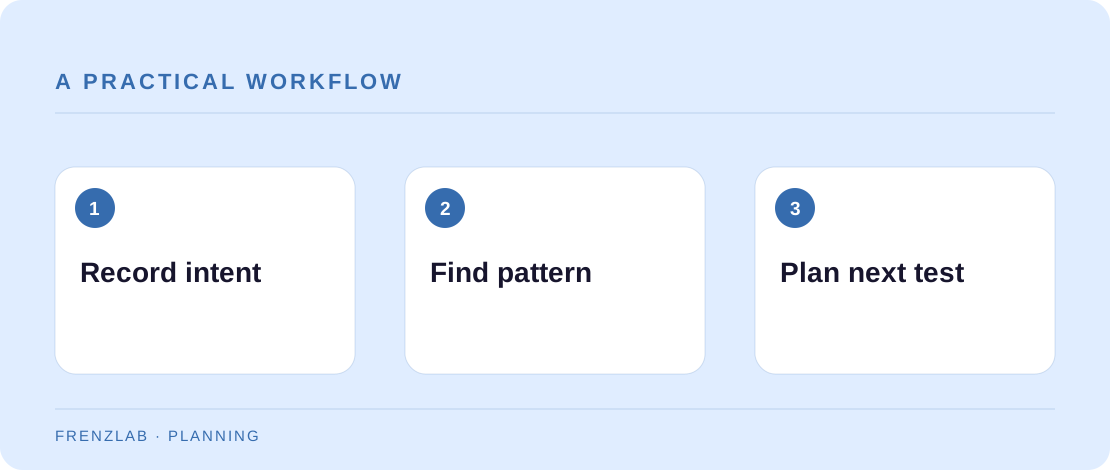
Take a small sample of posts from the month. For each, record the audience question, format, source material, intended next step, actual response, and effort required. Look for patterns: Did process photos produce useful questions? Did a checklist lead to visits but a weak landing page? Use the Content Calendar Planner for the next month only after this review, replacing its prompts with the questions and formats that earned useful responses.
Keep one experiment, one repeatable format, and one thing to stop. That is more actionable than a long list of “more content” goals. If a post performed poorly, inspect its opening, proof, timing, and destination before deciding the topic is unwanted. Talk to customer-facing colleagues too; offline questions can reveal value that dashboards miss.
A worked example
A team notices that two repair demonstrations brought appointment questions, while five sale graphics brought many impressions and no inquiries. Next month it plans one repair demonstration each week, tests a clearer booking page, and pauses repetitive sale graphics. The decision is tied to the business task rather than a single vanity metric.
Before you publish
- Did each post have a stated purpose?
- Are you comparing outcomes with production effort?
- Can you name one repeat, one experiment, and one thing to stop?
A common mistake
Do not read a one-month chart as proof of a platform-wide rule. Audience size, season, and topic can affect results. Use the audit to form a testable next step and keep learning from real questions.
Use the related Frenzlab tool to put this method into practice, then check the result in the destination platform.
Sources and further reading
Platform features and interfaces may change. These references were used to check the platform-specific details in this guide.
Practical, independently written guidance. If a step has changed, tell us so we can verify it.